
August 15, 2021 (24 Asad 1400) changed the fate of a nation in the blink of an eye. In the midst of this collapse, the women of this land were deprived of their most fundamental individual rights and freedoms overnight. Banned from education and work “until further notice,” they watched their dreams shatter, and their futures hang in permanent uncertainty —returning exhausted to a cage called “home.” Around 8 million people were forced to leave their homes and migrate following the collapse of the republic due to the absence of security and economic survival.
We believe that history is not written solely by grand political events, but takes shape through personal experiences, individual narratives, and human memories. Undoubtedly, women—more than any other oppressed group—have borne the heavy burden of these political upheavals, and true history is etched into the lines of their faces.
In this second issue of Gandomin, we give space to these voices, documenting and bringing together 60 narratives that capture the profound impacts and transformations across two periods of Taliban rule. Over the past half-century—and particularly between the first era in the 1990s and the present day—generations have passed with the turning of the calendar pages. At a deeper level, this signifies a rupture between generations and a bitter repetition of history. Today’s deprivation of young girls and teenagers repeats the very cycle their mothers endured in the 1990s. This historic regression has not only suspended the dreams of the current generation but also threatens the future of the next, pushing them prematurely into domestic responsibilities, forced marriages, and recurring pain.
The narratives in this issue reflect the multifaceted realities of women’s daily lives in Afghanistan: from burning photo albums and school memories in home ovens during the 1990s to the painful erosion of Afghanistan’s human and cultural capital in exile. Together, they bring the two eras into conversation—schoolteachers facing illiterate Taliban forces, the stolen childhood of a 12-year-old girl working behind her father’s shop counter rather than attending school, and a young judge forced into hiding and exile just as she was about to take her seat on the bench. These stories are interwoven with first-hand accounts of street protests, imprisonment, displacement camps, and the enduring grief of mourning a homeland left behind.
Although public spaces—sidewalks, parks, cafes, and universities—were emptied of women, the story of resistance moved from the streets to basements, home classrooms, podcasts, coding on paper, and online learning. Women found new pathways to keep learning, proving that while material resources were stripped away, their minds remained unconquered.
The narratives in this issue are arranged step-by-step alongside the lived experiences of these women: we begin with “Inherited Wounds,” tracing the history of this pain and struggle; move to “Narrative of the Day of Fall,” capturing the bitterness of collapse; enter “Behind Closed Doors,” portraying the isolation of life at home; continue through “Inevitable Geographies,” reflecting the displacement of borders and exile; and conclude with “Silence, Sound, and the Future,” turning toward hope and the resilience that remains hidden beneath the silence. This sequence follows the journey of a generation that refused to be forgotten.
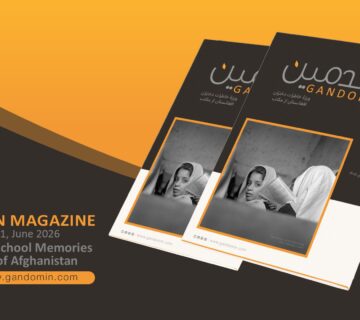
In this issue, Gandomin stands as a fortress for collective memory—a record of staying, leaving, small daily acts of resistance, and silent cries that must not disappear into the dust of oblivion. The photographs published alongside these narratives serve as historical testimony: candid, personal images submitted by the authors themselves to capture the living faces of suffering, awareness, and endurance.
I extend my heartfelt gratitude to every woman who picked up a pen to write about her experiences, disruptions, and perseverance with honesty and courage, becoming the narrator of this chapter of history. We firmly believe that as long as a story is written and read, its authors remain undefeated.
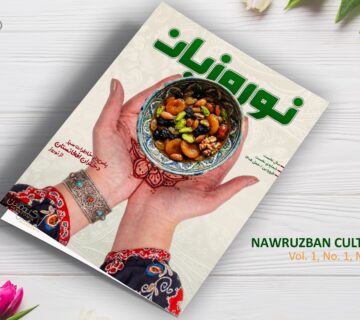
GANDOMIN MAGAZINE
Vol. 1, No. 2, August 2026
Published by: Gandomin Media
Managing Director: Behishta Khurram
Editor: Tamanna Mehrzad
Layout & Graphic Designer: Nesar Arianfar


No comment