

It is the school holidays, and I truly have no motivation to do anything. Right now it is two o’clock in the afternoon. We have been without electricity and water for twelve consecutive hours, in the peak of the summer heat. People have become accustomed to this situation. They even say they love this heat because it ripens the grapes. Most people have gone to villages and towns around Kabul for the holidays. As for me, by sheer luck and fate, I experienced what it means to become a sheep. Yes. For exactly five hours, I was a sheep.
At last, I decided to apply for a passport. Everyone who had gone through the process before told me that I had to arrive at four in the morning, before sunrise—even though government offices officially open at eight. Well, at best, I managed to get there at five in the morning, just before the call to prayer. Throughout my years of working at a school, I was always part of the administration. Every morning, with nothing more than a greeting, I would organize more than one thousand students into neat lines. I am a teacher.
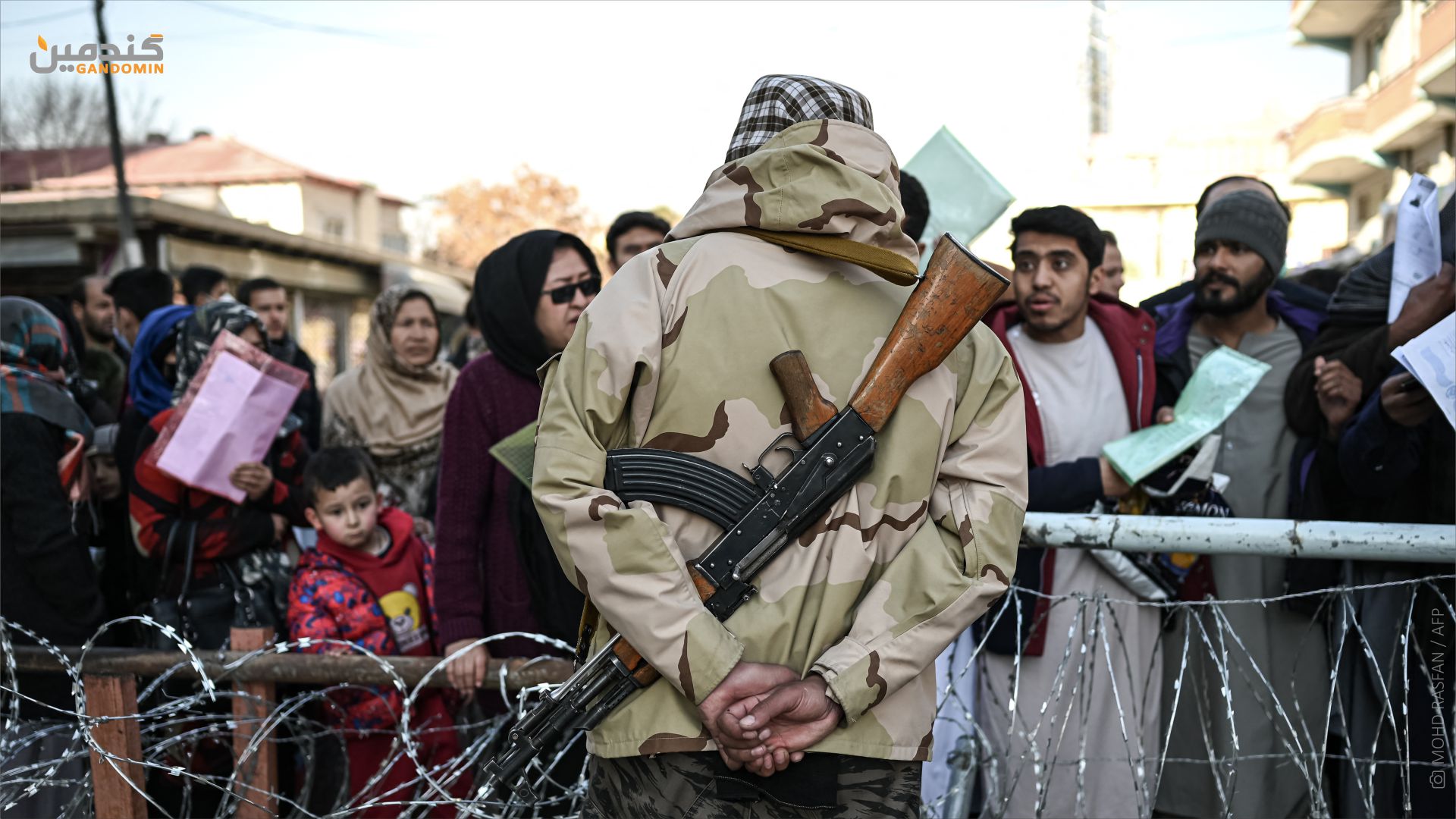
But today, for five consecutive hours, I was a sheep. They stood outside the main gate of the passport office, holding sticks, organizing the queues. They beat people. They insulted us. They shouted at us. I do not know why. I am an ordinary teacher, but from the eyes of the hundreds of women standing in line, it was obvious that many of them were nurses and doctors. No. No. They were human beings. No one said a word.
A young Hazara girl was standing beside me. She wanted to talk to me, but I was overwhelmed with stress and did not feel like speaking to anyone. I liked her smile. I liked her calmness. I liked the happiness she carried so effortlessly. Twice she asked me to recite a poem for her. Can people tell from my eyes that I am a poet? In that line were mothers searching anxiously for their children, who had been left with their uncles because, in the absence of the father, the uncle had to grant permission for a mother to obtain a passport for her own child. If there was no uncle, then a grandfather. In the end, there had to be a man. And this is where “mother” becomes that long, meaningful, heartbreaking sentence on the page of a book—a sentence that apparently cannot be completed without the presence of a man, serving as its final period.
One tiny period. One entire world of value. Men who, in the truest sense, had never been fathers. Their children remember only the smell of hashish on them, the shouting, the anger, and the slap across their mother’s face. I touched the old walls of that alley so I would never forget the day when I witnessed how a crowd of human beings could so easily be turned into sheep. I was filled with anger at the sticks in their hands and at their shouting. I swallowed that anger because I had no other choice. They called one another “Mujahid.” We know them as the Taliban.
I received my passport. Perhaps I will never leave this land. It has now been five years since they came to our city, and we have been living alongside them ever since. I know nothing about politics. I do not know what is happening. But I do know this: The school gate was closed to girls by a fellow Afghanistan, a Muslim. When I was in my cradle, my mother recited Hafez and Saadi to me. I am not one of the great figures of history who can forgive them. How can I forgive, when in the most beautiful years of my adolescence I witnessed suicide bombings and explosions? I saw children covered in blood. I saw a mother who had lost her hand. I saw a father killed during the dawn prayer.
I will never forget. Can I forgive? The people who turned me into a sheep for five hours, standing over us with sticks like shepherds? No. Shepherds possess dignity. They possess honor. These men are not shepherds. They are the same Taliban they have always been.
Merchants of religion, who have turned this world into hell for us so that, supposedly, they can take us with them to paradise.
During those five hours of being a sheep, there was one moment that filled me with pride. The entire passport process was carried out not by the Taliban, but by courageous Afghanistan women sitting behind the computers. They were the ones who kept everything moving. It was there that my faith returned. It reminded me that we teachers are walking the right path. A teacher who loves poetry. And poetry is always the outcome of love. Love is the fruit of heartfelt faith. It is these beating hearts that reveal our humanity. It is our feelings that make us human. “Humanity.” The most beautiful word among all the beautiful words I know.
After five hours of being a sheep in the dusty streets of Kabul, I threw away the face mask I had been forced to wear. With every sip of cold water, I celebrated my humanity. And I drank it with pride.
One last thing. In the corner of my passport, it still read: “Islamic Republic of Afghanistan.” Not “Islamic Emirate of Afghanistan.” My heart broke for my country. It melted inside me, and flowed from my eyes.


No comment